Best Portable Air Conditioner for Apartments: 2026 Guide
Best Portable Air Conditioner for Apartments: A Simple 2026 Buyer's Guide
By the Exquisite Deals Team — the Exquisite Deals curation team hand-reviews every product it lists, comparing specs, value, and real buyer questions before recommending anything.
Quick Answer
The best portable air conditioner for apartments is a self-contained, single-hose or dual-hose unit sized to your room, with a window kit that fits your window, a quiet night mode, and a BTU rating matched to your square footage. For most renter-sized rooms, a 10,000 BTU model hits the sweet spot of power and portability.
Featured Product

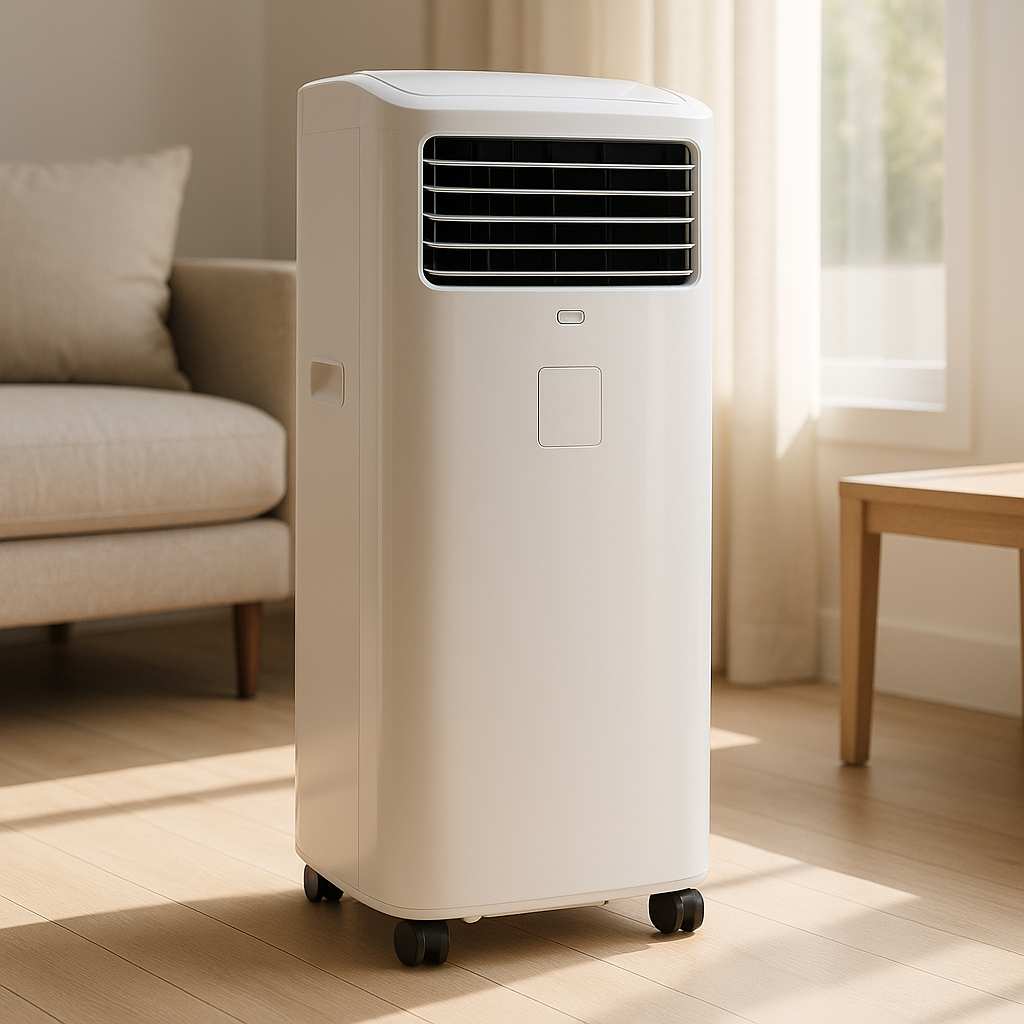
Portable Mobile Air Conditioner 10,000 BTU Room AC Unit — a rolling, no-install cooler sized for bedrooms, offices, and small living rooms where a window AC or central air isn't an option. Shop now →
Why This Matters
If you rent, you already know the problem. Many leases don't allow window units. Some windows are the wrong shape for them. And central air, when it exists at all, often cools the whole building unevenly, leaving your bedroom warm while the hallway freezes. A portable air conditioner solves this without drilling, without permanent changes, and without a landlord conversation you'd rather avoid.
But "portable AC" covers a wide range of machines, from tiny desktop misters that barely move the temperature to full 14,000 BTU units that can cool a studio. Buying the wrong one is a common and expensive mistake. A unit that's too small runs constantly and never catches up on a hot day. A unit that's too large cools fast but leaves the room damp and clammy because it short-cycles before it can pull moisture from the air. Getting the size and features right is the whole game, and that's what this guide walks through in plain language.
The goal here isn't to sell you the most expensive machine. It's to help you match a unit to your actual room so you're comfortable, your electric bill stays reasonable, and you don't end up returning a heavy box you already hauled up three flights of stairs.
Understanding the Topic
A portable air conditioner is a freestanding box on wheels that sits on your floor. Unlike a window unit, the whole machine stays inside the room. It cools the air the same basic way any AC does: a compressor and refrigerant pull heat out of the room air, and that heat has to go somewhere. On a portable unit, the heat leaves through an exhaust hose that vents out a window using an included window kit.
That exhaust hose is the part renters most often overlook. Even the most "install-free" portable AC still needs a way to push hot air outside, or it will simply move heat around the room and never cool it. The good news is that the window kit is a temporary plastic panel that slides into your window opening and comes out in minutes. No screws, no damage, no permanent hardware.
There are two main designs. A single-hose unit uses one hose to vent hot air out. It's simpler, lighter, and cheaper, and it works well for small to medium rooms. A dual-hose unit uses one hose to pull in outside air and another to vent it, which makes it more efficient in larger or hotter rooms but also bulkier and pricier. For a typical apartment bedroom or home office, a single-hose 10,000 BTU unit is usually all you need.
You'll also see units advertised with two BTU numbers. The older "ASHRAE" BTU rating is the bigger, more generous number. The newer "SACC" (Seasonally Adjusted Cooling Capacity) rating is the more realistic, real-world number the U.S. Department of Energy now requires. When you compare models, compare the same rating type so you're not fooled into thinking one is much stronger than another.
What to Look For
When you're choosing the best portable air conditioner for apartments, focus on the handful of features that actually affect daily comfort:
- Correct BTU for your room size. As a rough starting point, 8,000 BTU (SACC) suits rooms up to about 200 square feet, 10,000 BTU suits roughly 300–450 square feet, and 12,000–14,000 BTU is for larger open spaces. Sunny rooms, top floors, and kitchens need a step up.
- A window kit that fits your window. Check whether your window slides up-and-down or side-to-side, and measure the opening. Most kits fit standard sliding and double-hung windows, but casement and unusually narrow windows may need an adapter.
- A quiet or night mode. If the unit will run in a bedroom, look for a sleep setting that dims the display and lowers fan noise. Portable ACs are never silent, but a good night mode makes a real difference.
- Self-evaporating or easy drainage. Air conditioners pull water out of the air. Better units evaporate most of it out the exhaust automatically. Otherwise, you'll periodically empty a drain tank, so know which type you're getting.
- Casters and a manageable weight. "Portable" is relative — these units are heavy. Smooth-rolling wheels and grab handles matter if you'll move it between rooms.
- A remote and a timer. A remote lets you adjust the temperature without getting up, and a timer lets you pre-cool the room before you get home or shut off after you fall asleep.
- A washable filter. A reusable filter you can rinse keeps airflow strong and saves you from buying replacements.
Common Mistakes
The single most common mistake is buying on BTU alone and ignoring the exhaust setup. People imagine a portable AC as a machine that just blows cold air, forget about venting the hot air outside, and are disappointed when the room won't cool. Always plan for where the hose will vent before you buy.
The second mistake is oversizing. Bigger is not better with air conditioning. An oversized unit cools the air quickly, hits the target temperature, and shuts off before it has time to remove humidity. The result is a cold, clammy room and a machine that turns on and off constantly, which is hard on the compressor and your electric bill. Match the BTU to the room, and don't buy a 14,000 BTU unit for a 150-square-foot bedroom.
A third mistake is ignoring window compatibility. A portable AC is useless if its window kit won't seal your particular window. Measure first. Casement (crank-out) windows and sliding glass doors often need a specific accessory, and a poor seal lets hot air pour right back in.
Finally, many buyers skip the drainage question. In humid climates, a unit that isn't fully self-evaporating may fill its internal tank and pause until you empty it. That's fine if you expect it, but frustrating if you didn't. Read how the model handles condensate before you commit.
Practical Example
Say you rent a one-bedroom apartment. The bedroom is about 12 by 12 feet, or roughly 300 square feet, on the sunny top floor, with a standard double-hung window. Central air keeps the living room comfortable, but the bedroom runs several degrees warmer at night and you can't sleep.
A window unit is out because your lease forbids them. So you look at portable units. Because the room is on the top floor and gets afternoon sun, you nudge up one size from the baseline and land on a 10,000 BTU model. You confirm the included window kit fits a double-hung window, set it up in about ten minutes without tools, and vent the hose out the window.
You run it on the sleep setting overnight. The room drops to a comfortable temperature, the display dims, and the fan noise settles into a steady, sleepable hum. In the morning, you roll it into the closet or leave it by the window. No holes, no landlord conversation, no permanent changes. That's exactly the scenario a 10,000 BTU portable unit is built for.
Our Pick
For most apartment dwellers, we point to the Portable Mobile Air Conditioner 10,000 BTU Room AC Unit. The 10,000 BTU class is the practical middle ground for renters: strong enough for a real bedroom, home office, or small living room, but still light enough to roll from room to room and store in the off-season.
It's a self-contained, freestanding unit, so there's no permanent installation — you vent the hose out the window with the included kit and you're done. That "no install" design is precisely what makes a portable AC work in a rental, where drilling and window units are often off-limits. For live specifications, current features, and full details, check the product page directly rather than relying on any single spec quoted here.
If your space is much smaller than 300 square feet, you could size down to save energy; if you're cooling an open studio, you might size up. But for the typical apartment room, 10,000 BTU is the size we'd reach for first. See it here: Portable Mobile Air Conditioner 10,000 BTU Room AC Unit.
Frequently Asked Questions
How many BTUs do I need for an apartment bedroom?
For a bedroom up to about 200 square feet, 8,000 BTU (SACC) is usually enough. For 300 to 450 square feet, step up to 10,000 BTU. Add capacity if the room gets heavy afternoon sun, sits on a top floor, or connects to a kitchen.
Do portable air conditioners really need a window?
Yes. A portable AC removes heat from the room and has to send that heat somewhere, so it vents through a hose out a window using an included kit. Without venting, the unit just circulates warm air and won't cool the room. The kit is temporary and leaves no permanent marks.
Are portable air conditioners allowed in rentals?
Almost always, yes. Because a portable unit sits on the floor and vents through a removable window panel, it doesn't require the permanent installation that most leases prohibit with window units. Still, it's worth a quick check of your lease if you're unsure.
Single-hose or dual-hose — which is better?
Single-hose units are lighter, cheaper, and fine for small to medium rooms, which covers most apartments. Dual-hose units are more efficient in large or very hot spaces but are bulkier and cost more. For a standard bedroom or office, single-hose is usually the sensible choice.
How much water do portable air conditioners produce?
They pull moisture from the air as they cool. Many modern units evaporate most of that water out through the exhaust automatically. In humid climates, you may still need to empty a small internal tank occasionally, so check how a specific model handles drainage.
Are portable air conditioners noisy?
They make more noise than a central system because the compressor sits inside the room. That said, a good sleep or night mode lowers the fan speed and dims the lights, producing a steady background hum most people can sleep through.
Can I move a portable AC between rooms?
Yes, that's a key advantage. Most units have caster wheels and handles so you can roll them from bedroom to living room. You'll just need a window in each room to vent the exhaust hose.
Key Takeaways
- The best portable air conditioner for apartments is one sized correctly to your room, not the biggest one you can find.
- A 10,000 BTU unit is the practical sweet spot for most renter-sized bedrooms, offices, and small living rooms.
- Every portable AC needs to vent hot air out a window with the included kit — plan for this before buying.
- Match the SACC BTU rating to your square footage, and step up a size for sunny or top-floor rooms.
- Look for a quiet night mode, self-evaporating drainage, a fitting window kit, and smooth caster wheels.
- Avoid oversizing, which leaves rooms cold and clammy and wastes energy.
Related Resources
- Best Portable Washing Machines for Small Spaces in 2026 — another install-free appliance built for apartment living.
- Tub Faucet Hose Buying Guide: How to Choose a Clip-On Sprayer — a renter-friendly upgrade that needs no permanent changes.
- Best Sunrise Alarm Clocks in 2026 — pair a cool room with a gentler wake-up for better sleep.
Ready to Cool Your Space?
Ready to find the right fit? Explore Exquisite Deals' Home & Garden collection and shop the deal at exquisite-deals.shop.