How to Choose an Automatic Cat Toy for Indoor Cats: A Simple Buyer's Guide
How to Choose an Automatic Cat Toy for Indoor Cats
By the Exquisite Deals Team — the Exquisite Deals curation team hand-reviews every product it lists, comparing specs, value, and real buyer questions before recommending anything.
Quick Answer
To choose an automatic cat toy for indoor cats, match the motion style to your cat's hunting instinct, check that it runs on a rechargeable battery with an auto-shutoff timer, confirm the moving parts are enclosed and the materials are chew-safe, and pick one quiet enough to run while you work or sleep.
Featured Product

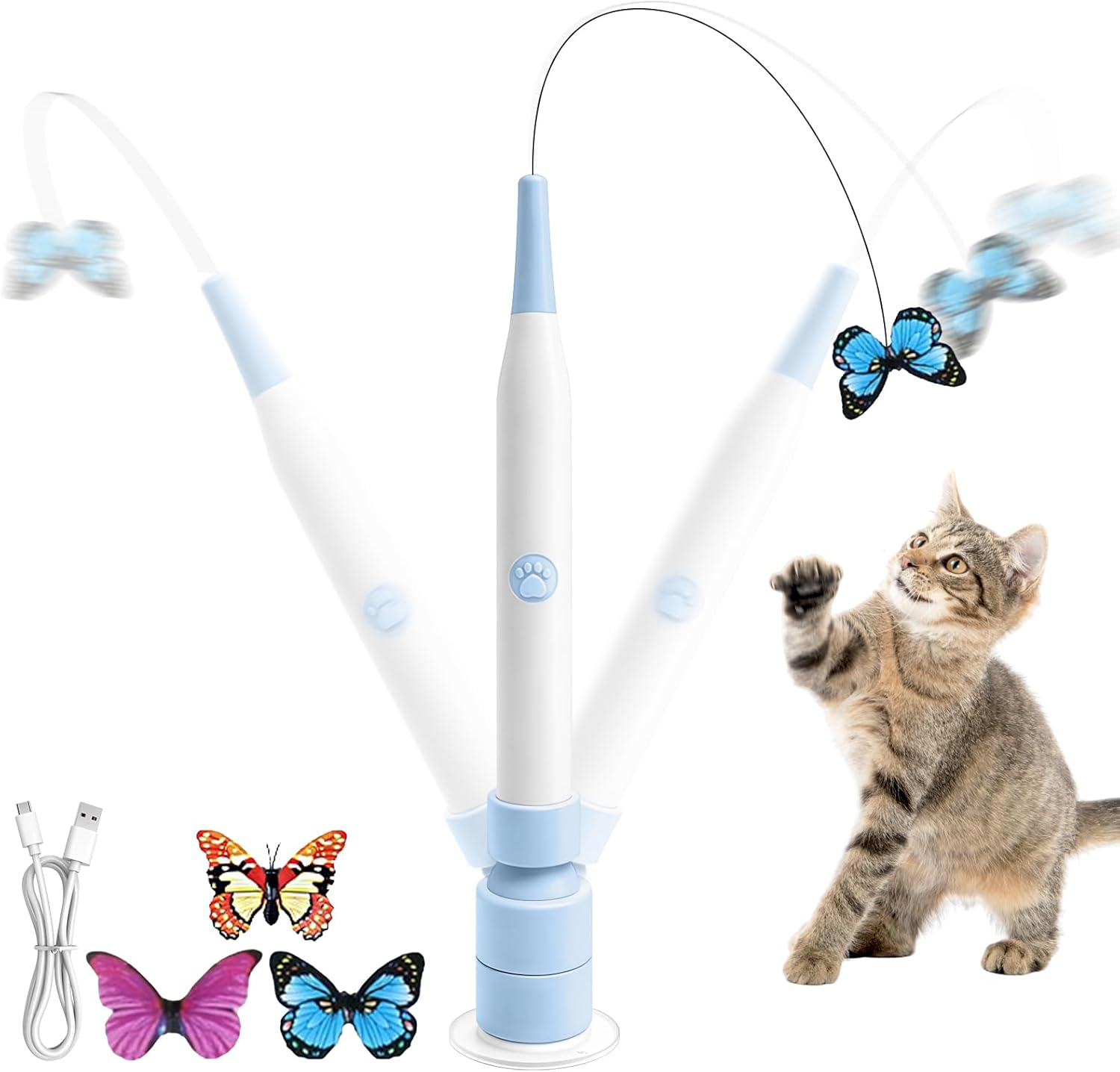
Rechargeable Automatic Cat Toy Butterfly Feather Suction — a suction-cup mount means it sticks to a smooth floor or wall and keeps the fluttering feather in one predictable play zone instead of skittering under the couch. Shop now →
Why Buyers Ask This
Most people who search for this are not shopping for fun. They are solving a problem. The cat is bored. The cat is waking them up at 4 a.m. The cat is putting on weight, or scratching furniture, or bolting around the hallway at midnight because nothing else happened all day. Indoor cats live safe lives, but safe lives are quiet ones, and a cat that never gets to stalk anything will invent something to stalk. Usually your ankles.
The other reason is simpler: time. A wand toy works beautifully, but it needs a human on the other end of it, and most people can only give ten or fifteen focused minutes a day. An automatic toy is an attempt to buy back some of that time without shortchanging the cat.
And then there is the disappointment factor. A lot of shoppers arrive at this question because their first automatic toy failed. It ran for two days and the cat never looked at it again. That is common enough that it deserves a real explanation, not a shrug, so we will get to why it happens further down.
Understanding the Topic
An automatic cat toy is any toy that generates its own movement. That is the whole category, and it covers wildly different designs that behave nothing alike.
The main families look like this. Fluttering or wand-style toys move a feather, ribbon, or fabric butterfly in a loose, unpredictable arc — usually mounted to a base or a suction cup so the motion stays in one area. Rolling or self-propelled balls wander across the floor, bumping into things and changing direction. Track toys keep a ball circling inside a closed loop so the cat bats at it through openings. Laser units project a moving dot. Burrow or peekaboo toys poke a wand out from under a fabric cover in random spots.
What makes any of them work is one thing: they imitate prey. A cat's play drive is a hunting sequence — spot, stalk, pounce, catch, kill, eat. Toys that trip that sequence hold attention. Toys that move in an obvious, repeating loop do not, because a cat figures out the pattern within a few sessions and correctly concludes that this thing is not alive and not food.
That is the single most useful idea in this whole guide. When you compare two automatic toys, you are really comparing how convincingly each one fakes being alive.
It also explains the biggest structural limitation of the category. A laser dot can never be caught. No matter how long the chase lasts, the sequence never completes, and some cats find that genuinely frustrating rather than satisfying. Toys with something physical to grab — a feather, a fabric wing, a ball — let the cat finish the job. That is why catchable toys tend to hold up better over months.
What to Look For
- Unpredictable motion. Look for randomized direction changes, variable speeds, or multiple motion modes rather than a single fixed loop. Irregularity is what keeps a cat guessing.
- Something the cat can actually catch. A physical target that can be pinned and bitten completes the hunting sequence. Purely projected light does not.
- An auto-shutoff timer. Toys that run in short bursts and then rest do two things: they save battery, and they prevent the cat from getting habituated to a machine that never stops. Intermittent availability keeps novelty alive.
- Rechargeable power. USB-rechargeable units cost less to run over a year than anything that eats AA batteries every couple of weeks. Check whether the charging port is sealed or exposed.
- Quiet operation. A motor that whines will annoy you, and a loud one will scare a timid cat off the toy permanently. If a listing emphasizes quiet running, that is a meaningful signal.
- Chew-safe, replaceable attachments. Feathers and fabric wings get destroyed — that is the toy doing its job. Look for designs where the attachment can be swapped, and avoid anything with glued-on beads, small plastic eyes, or loose string.
- Enclosed moving parts. Exposed gears, axles, or motor housings are a place for claws, whiskers, and long fur to get caught. Enclosed mechanisms are safer for unsupervised play.
- Stable mounting or a low center of gravity. A toy that tips over on the first pounce is a toy the cat stops trusting. Suction-cup and weighted bases both solve this.
- Surface compatibility. Rolling toys need open floor; they stall on thick carpet and vanish under furniture. Mounted toys work in small apartments where floor space is scarce.
- Easy cleaning. Litter dust and shed fur get into everything. A wipeable body and a removable attachment save you real irritation.
Common Mistakes
Leaving it out all the time. This is the number one reason automatic toys stop working. Constant availability turns a hunting target into furniture. Put the toy away between sessions and bring it out once or twice a day, and its novelty lasts for months instead of days.
Buying only for the cat's age. Kittens will chase almost anything. Adults and seniors are pickier and need motion that reads as genuinely prey-like. A toy that thrilled a four-month-old kitten may bore the same cat at three years old.
Ignoring your cat's preferred prey type. Some cats are bird cats — they look up, they leap, they love airborne motion. Others are mouse cats who stay low, stalk along the floor, and pounce flat. Watch which one yours is before you buy. Buying a ground-rolling toy for a leaping bird cat is a common and avoidable miss.
Assuming it replaces you. It does not. Automatic toys fill gaps in the day. Cats are social hunters with their people, and interactive play stays important. Think supplement, not substitute.
Skipping supervision on the first few runs. Watch the first two or three sessions before you leave the cat alone with any new toy. You are checking for aggressive chewing, a cord risk, or parts coming loose.
Expecting instant interest. Plenty of cats ignore a new toy for several days. Cats are neophobic — new objects are suspicious until proven otherwise. Give it a week and try running it during the cat's natural active hours, which for most cats means dawn and dusk.
Practical Example
Take a fairly typical situation: a one-bedroom apartment, one four-year-old indoor cat, and an owner who works from home. The cat has started jumping on the desk mid-afternoon and knocking pens off it, which is not really mischief — it is a bored animal asking for something to happen.
The floor space is mostly taken up by furniture, so a rolling ball toy would spend its life stuck under the sofa. That points toward a mounted toy. The cat is a leaper who tracks birds through the window, so airborne motion beats floor-level motion. And because it will run while the owner is on calls, quiet operation matters more than usual.
The sensible answer here is a suction-cup-mounted fluttering toy set up on a smooth wall or floor near the cat's usual afternoon spot, run for a fifteen-minute session before the workday's busiest stretch, then put away. The cat gets its hunt, burns some energy, and the desk stops being the most interesting thing in the room.
Notice how little of that decision was about the toy's feature list. It was about the room, the cat, and the schedule. That is the right order to think in.
Our Take
Most people overthink specs and underthink placement. If you get the motion type right for your particular cat and you ration the toy's availability, a modest automatic toy will outperform an expensive one used carelessly.
For small indoor spaces, we generally point people toward mounted, fluttering designs first. The Rechargeable Automatic Cat Toy Butterfly Feather Suction fits that profile: a suction-cup mount keeps it anchored where you put it, the feather target is something the cat can actually catch and pin, and rechargeable power means you are not feeding it disposable batteries. It is a reasonable starting point for a bird-type cat in an apartment.
What it will not do is replace your attention, and we would rather say that plainly than oversell it. Check the product page for current specs, run times, and details before you buy — we do not quote numbers we cannot stand behind.
Frequently Asked Questions
How long should an automatic cat toy run each session?
Ten to twenty minutes is a good target for most adult cats. Cats hunt in short, intense bursts rather than long steady stretches, so several brief sessions across the day work better than one long one. Many automatic toys have built-in timers that match this pattern.
Are automatic cat toys safe to leave unsupervised?
Some are, once you have watched the first few sessions and confirmed your cat plays normally with it. Toys with enclosed motors, no loose cords, and no small detachable parts are the better candidates. Anything with string, ribbon, or a chewable attachment on a determined chewer should stay supervised — swallowed string is a serious veterinary emergency.
Why did my cat lose interest after a few days?
Almost always one of two reasons: the toy was left out constantly and stopped being novel, or its motion pattern was predictable enough for the cat to solve. Try putting it away between sessions and rotating it with two or three other toys. Rotation alone revives a lot of tired toys.
Do automatic toys work for multiple cats?
Sometimes, but expect a dominant cat to monopolize it while the others watch. If you have a multi-cat household, running two toys in separate rooms usually works better than one shared toy, and it avoids the resource guarding that can turn play into a scuffle.
Are laser toys bad for cats?
Not bad exactly, but limited. The cat can never catch the dot, so the hunting sequence never completes, and some cats develop obsessive or frustrated behavior around it. If you use a laser, end every session by landing the dot on a physical treat or toy the cat can actually catch. Never aim it at eyes.
What about senior cats or cats with joint problems?
Pick low, slow, ground-level motion rather than anything that encourages leaping. Gentle play is still valuable for older cats — it supports mobility and mental sharpness — but the toy should not tempt a stiff cat into jumps that hurt. Ask your vet if you are unsure what activity level is appropriate.
How often do I need to replace the attachments?
Depends entirely on how hard your cat plays. An enthusiastic cat can strip a feather in a few weeks. That is normal wear, not a defect. Buy a toy whose attachment can be replaced and keep a spare on hand.
Will an automatic toy stop my cat waking me at night?
It can help, but timing matters more than the toy. Run a play session in the evening, close to the cat's last meal, so the hunt-eat-groom-sleep cycle lands at bedtime rather than 4 a.m. The toy is one input into that routine, not a fix on its own.
Key Takeaways
- Match the motion style to your cat's natural hunting type — airborne for leapers, ground-level for stalkers.
- Prefer toys with a catchable physical target so the hunting sequence can actually complete.
- Rechargeable power, auto-shutoff timers, and quiet motors matter more day to day than any headline feature.
- Enclosed moving parts and replaceable, chew-safe attachments are the core safety checks.
- Put the toy away between sessions — rationing novelty is what makes it last.
- Watch the first few sessions before leaving your cat alone with any new toy.
- An automatic toy supplements interactive play; it does not replace it.
Related Resources
- Best Sunrise Alarm Clocks in 2026: A Simple Buyer's Guide — useful if your cat's early-morning routine has become your early-morning routine.
- Best Portable Washing Machines for Small Spaces in 2026 — a companion read for small-apartment living with pets.
- Are LED Light Therapy Masks Worth It? An Honest Buyer's Answer — another honest worth-it breakdown in the same spirit as this guide.
Ready to find the right fit? Explore Exquisite Deals' Nature's Pet Pantry collection and shop the deal at exquisite-deals.shop.